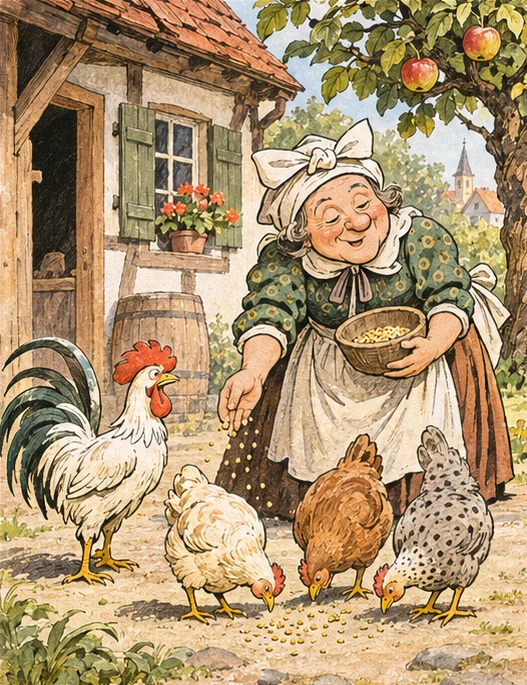
This satire dates from 1865. The new illustrations avoid graphic depictions. The actions and remedies in the story are not to be imitated.
A prologue, seven pranks and a conclusion
Seven pranks · 44 new illustrated scenes
This satire dates from 1865. The new illustrations avoid graphic depictions. The actions and remedies in the story are not to be imitated.
How often we hear or read about wicked children! Here, for example, are two called Max and Moritz. Instead of letting wise advice turn them toward goodness, they often laughed at it and secretly made fun of it. Yes, they were always ready for mischief. Teasing people, tormenting animals, stealing apples, pears and plums—these were certainly pleasanter and easier than sitting still on a chair in church or school. But alas, alas, when I look at the ending! A dreadful fate befell Max and Moritz. So what they did is pictured and written down here.
Start the first prankOriginal: Wilhelm Busch (1832–1908). German scan: Berlin State Library / World Digital Library, via Wikimedia Commons. Text compared with German Wikisource. This edition uses new illustrations and translations.
A newly illustrated edition of all seven pranks, with the prologue and conclusion, in 44 scenes. The new Korean and English prose translations follow the meaning rather than the rhyme. The German retains historical spelling. This is not a facsimile of every original drawing.
Wikimedia Commons · WDL7495 · Wikisource · Max und Moritz