WisdomSpring
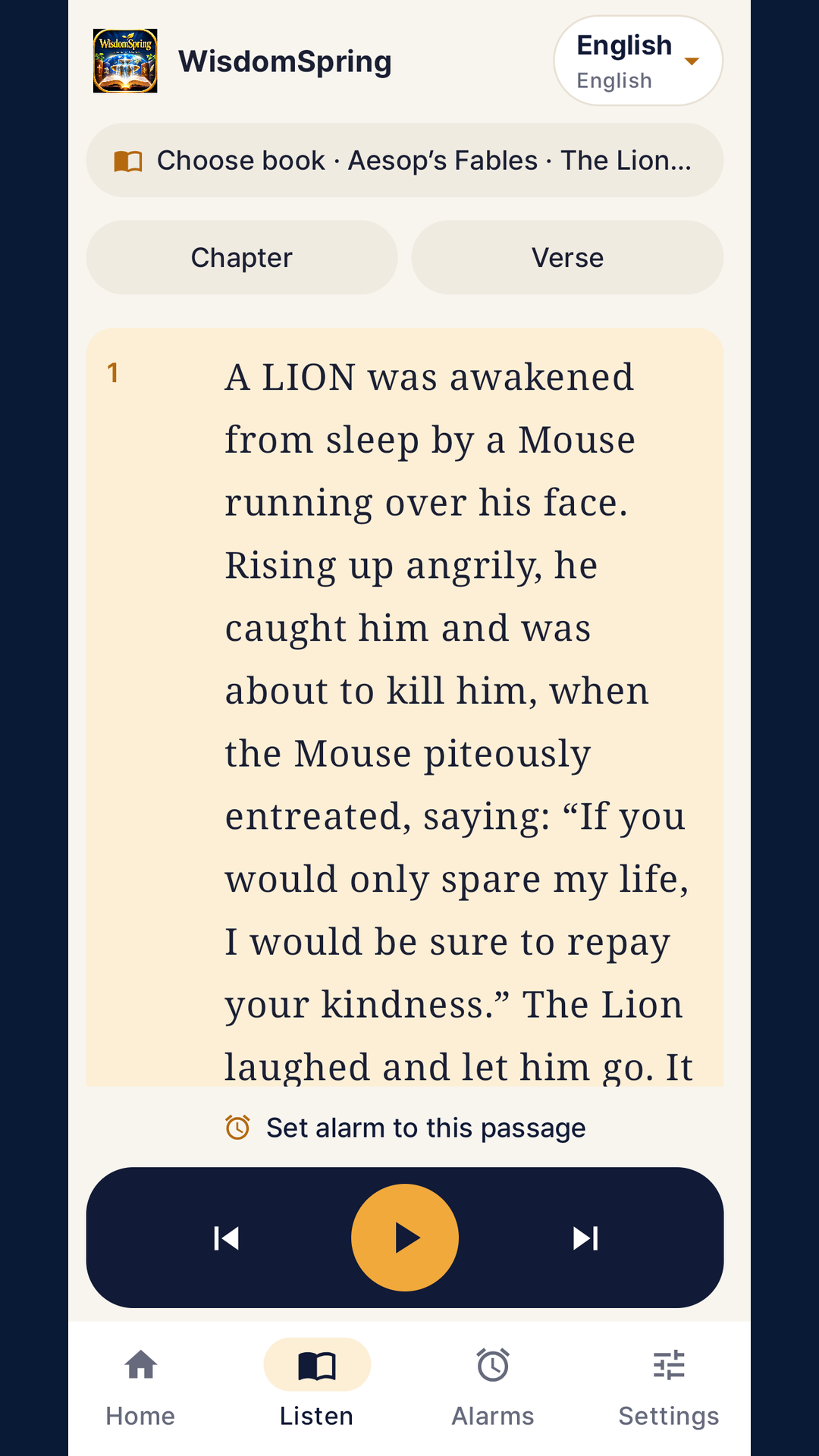
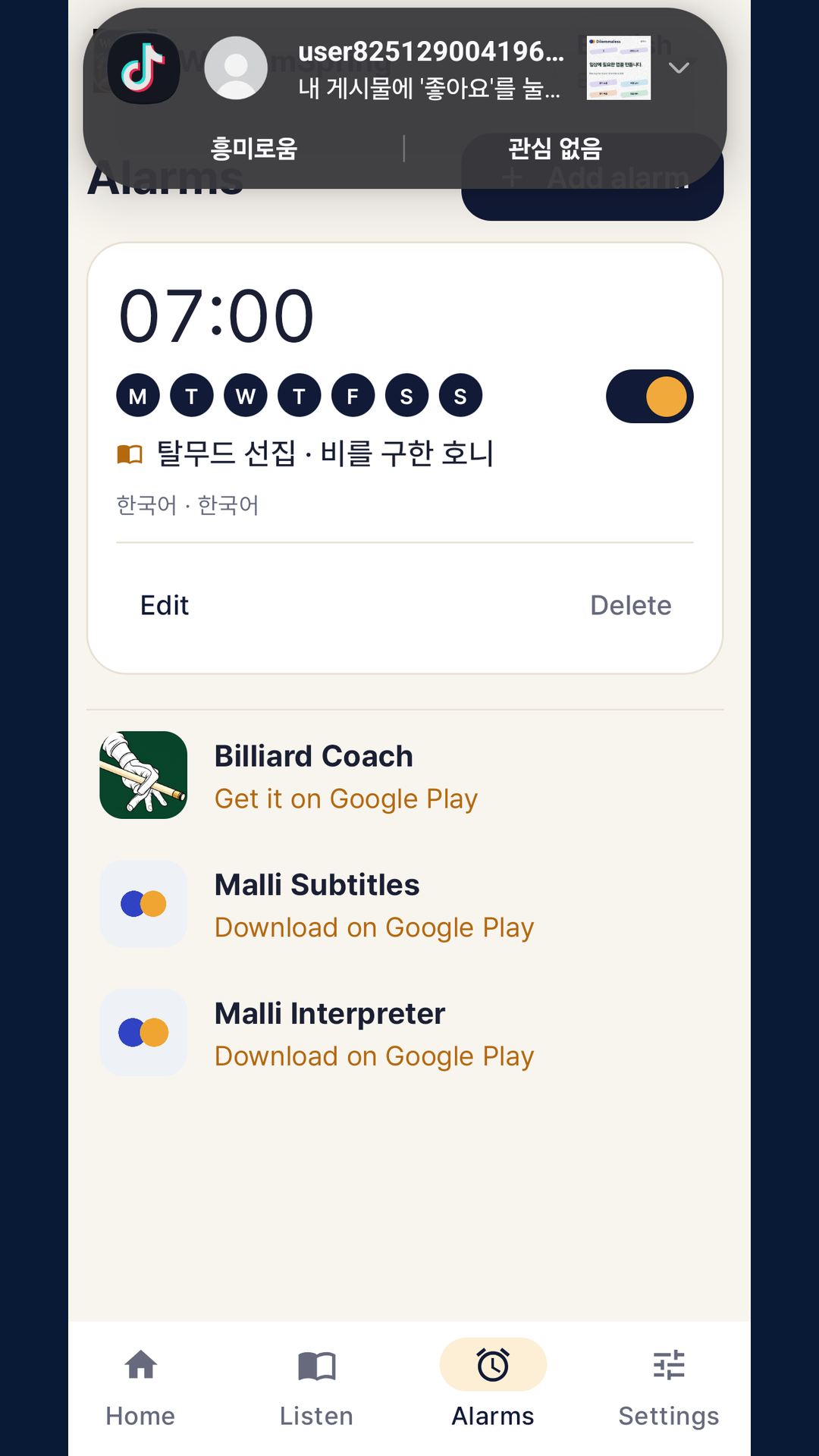
Read and listen to Aesop’s Fables, Talmud selections and Caigentan, with reading alarms.
Korean: 878 entries. English: 313 Aesop fables and 20 Talmud excerpts. Caigentan is not available in English.
Collections and languages
| Collection | Korean | English |
|---|---|---|
| Aesop’s Fables | 313 | 313 |
| Caigentan | 356 | — |
| Talmud stories | 101 | 8 |
| Pirkei Avot | 108 | 12 |
Korean: 878 entries. English: 313 Aesop fables and 20 Talmud excerpts. Caigentan is not available in English.
Reading guide and sources
Google Play release is being prepared. Download availability depends on review and publication.
Reading WisdomSpring
Aesop: 313 fables in Korean and English. The English text is George Fyler Townsend's public-domain translation. Read the choices and consequences, and compare the different lessons rather than treating every moral as a universal rule.
Caigentan: 356 Korean sections, 222 from the front collection and 134 from the back collection of the source used here. Section counts vary between editions. Descriptive Korean headings are editorial; original section identifiers are retained. No English translation is supplied.
Talmud: 101 Korean narrative selections, including traditional accounts, miracle stories, parables and discussion cases. They are retold from ancient passages with their circumstances and endings. They are not a complete translation of the Talmud. Pirkei Avot (Sayings of the Fathers), 108 sections across six chapters, is presented separately after the stories.
English Talmud coverage is limited to eight shorter stories and twelve selected sayings. It is not a translation of the expanded Korean edition.
Torah means Jewish teaching and law; Mishnah is a collection of traditional teachings; rabbi means a teacher in that tradition. These texts retain their religious and historical setting. Ancient views on status, gender, illness and reward should be read in that context.
Listen to one selection, notice the choice each person makes, and consider why another passage may offer a different answer.
Edition note: Korean Aesop uses the familiar Greek names for deities where Townsend uses their Roman equivalents. The place-name Liliput in fable 36 belongs to this English edition and is not presented as an ancient Greek place-name. Korean wording in Aesop and Caigentan has been revised for clarity in version 1.0.4. The English coverage is unchanged.
Contact
장보원 · Bowon Jang
ccolaju@gmail.com